
Hello!
This is Kim Dong-young, head director of Cleor Clinic Hongdae.
While providing treatments, I often hear these concerns:
"I look fine in the mirror, but my double chin is visible in photos."
"I'm not sure if my cheeks are sagging or if my face just looks bigger…"
"My weight is the same, but my jawline has become blurry."
"I feel a little sad when I see myself subtly pulling my chin up in selfies."😭"
These changes aren't actually about weight.
They are natural phenomena that occur as skin elasticity gradually decreases.
That's why you start looking into lifting procedures.
But when you actually search, there are so many types,
and the reviews are so different that many people don't know what to believe.
Today, I'll explain Hongdae Onda Lifting,
exactly as I would in a consultation room.
What exactly is Onda Lifting?
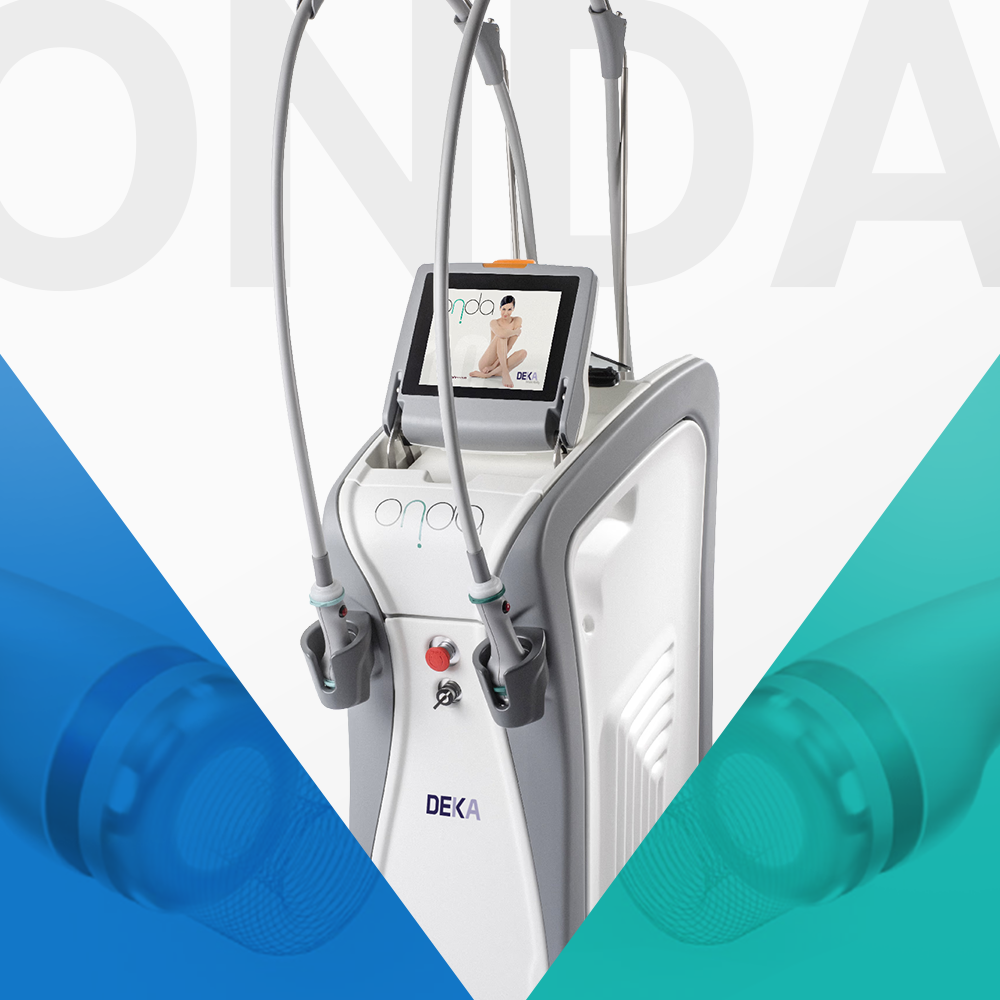
The 'Onda' used in Hongdae Onda Lifting
is a device developed in Italy,
that uses radiofrequency heat to precisely deliver energy to the inside of the skin, boosting elasticity.
The principle is easy to explain:
When heat stimulation is applied inside the skin,
our body sends a signal saying, "Stimulation detected, need to recover."
In that reaction process, collagen is newly generated,
and the loosened tissue is tightened, restoring elasticity.
You've probably felt your skin temporarily become firmer when you go to a sauna,,
right? The principle isn't exactly the same, but
the context is similar in that heat provides positive stimulation to the skin.
The difference is that Onda Lifting can accurately deliver
heat to the desired depth within the skin.
How is it different from other lifting procedures?
For those who are confused because there are so many lifting procedures,
I'll explain it by dividing them into three main categories.
Thread lifting involves inserting threads into the skin to
physically pull it up.
It has the advantage of showing immediate results,but
the procedure is more involved and requires downtime.
Ultrasound lifting (Ulthera)uses ultrasound to deliver heat to a very deep layer of the skin,
down to the SMAS layer.
It is sometimes used for those with significant sagging, but it can be quite painful.
Radiofrequency lifting (including Onda Lifting)uses radiofrequency heat to
tighten the skin and fat layers together.
It treats a relatively shallower layer than ultrasound, but
it is less painful and particularly effective for improving cheek and jawline definition.
In summary, Hongdae Onda Lifting is
a good option for those who
"are hesitant about threads, don't want something too painful,
and are concerned about bluntness in their cheeks and jawline."

Advantages of Onda Lifting: Elasticity and contouring at the same time
The Onda device is designed to allow radiofrequency heat to
effectively react with fat cells.
Thanks to this, you can expect to improve skin elasticity while also
somewhat refining the fat layer under the cheeks and jawline.
However, I want to clarify one thing.
It's not about drastically removing fat like liposuction,
but rather about tightening the loosened fat layer more densely,
which helps to refine the contour.
Different handpieces are used for each area
Hongdae Onda Lifting uses a combination of
two handpieces depending on the area and purpose.
The Shallow handpiece targets the dermis,
that is, the layer close to the skin surface.
It is mainly used when the goal is to improve fine lines or skin texture,
or on areas with thin skin such as the forehead and around the eyes.
The Deep handpiece delivers heat deep into the subcutaneous fat layer.
It is used to refine the contour of areas with fat layers, such as the cheeks and jawline.
For example, the cheeks are treated with the Deep handpiece, and the eye area with the Shallow handpiece,
designing the procedure for each area.
AI Image
Do you see dramatic changes immediately after the procedure?
It's important to know this in advance.
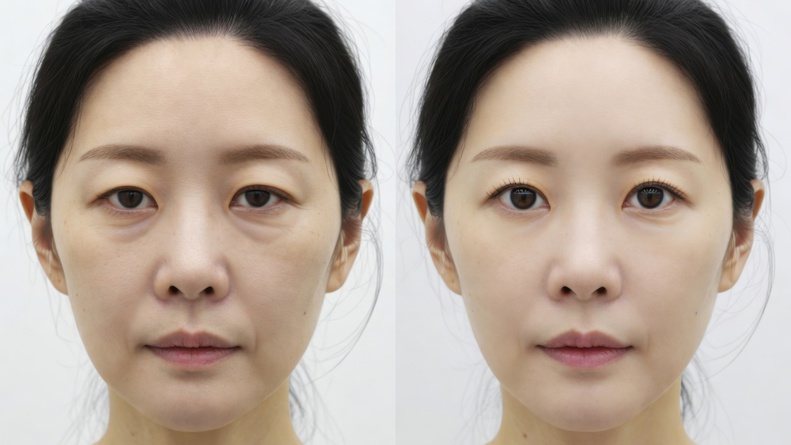
Collagen remodeling begins after radiofrequency heat stimulation,
but this process is not completed immediately.
Usually, you will start to feel improvements in skin texture and elasticity from
the 2nd to 3rd week after the procedure,
and the changes often become more noticeable between 4 and 8 weeks.
Therefore,it is a good option for those who"aren't in a rush but want natural improvements."
Who is Onda Lifting suitable for vs. who is better suited for other procedures?
Who is Onda Lifting suitable for?
Those whose face has become slightly loose but not severely sagging
Those who are concerned about bluntness in their cheeks or jawline
Those who are hesitant about thread lifting and want natural improvements
When other procedures are better
Other approaches may be more suitable for these individuals
Those with significant sagging who need a definite lifting effect
Those who want immediate and noticeable changes
Those with very thin skin and little subcutaneous fat
Frequently Asked Questions
Q. Is it very painful?
It's hard to say it's completely painless.
However, it's not a sharp pain, but rather a repeating hot and tingling sensation.
Areas close to the bone, such as the jawline or under the cheekbones, may feel more sensitive.
If you are concerned about pain, you can ensure sufficient application time for the numbing cream or
adjust the energy intensity during the procedure.
Q. Will there be swelling or bruising?
You may feel flushed or slightly swollen on the day of the procedure,
but it usually recovers within a day or two. Bruising is not common, but
it can rarely occur in those with weak skin or easily visible blood vessels.
Q. How long does the procedure take?
For the entire face, the procedure itself takes 20-40 minutes,
and including numbing time, you should allow a total of 60-90 minutes.
Q. Can I get it with fillers or Botox?
It is often possible to do both, but the order and interval are important.
If you receive radiofrequency treatment immediately after fillers, the filler may spread or change shape,
so it is safe to determine the order after reviewing the overall treatment plan.
Q. How many sessions do I need?
Some people are satisfied with just one session,
but most are recommended to repeat the procedure 3-5 times at 4-6 week intervals.
Collagen production is not completed with a single stimulation,
and the effect accumulates with repeated heat stimulation.
After that, many people receive touch-ups every 6 months to 1 year for maintenance purposes.
Q. Are there any precautions after the procedure?
Avoid saunas, hot baths, strenuous exercise, and alcohol on the day of the procedure.
It is also best to avoid scrubs or strong retinol products for a few days.
Moisturizing and sunscreen are essential.
If the pain worsens after the procedure, or if blisters or discharge develop,
or if only one side is particularly swollen, please visit the clinic immediately.
Hongdae Onda Lifting is a procedure that uses radiofrequency heat to boost skin elasticity,
and naturally refine the cheek and jawline.
Rather than immediate changes, it gradually improves through collagen remodeling,
and is suitable for managing your skin while maintaining your daily life without significant downtime.
However, it is not a procedure that is equally suitable for everyone.
Onda may be right for you depending on your skin condition and desired results,
or other procedures may be more effective.
It's never too late to decide after a thorough consultation.
Please feel free to contact us whenever you need ^^
충분한 상담을 통해 결정하셔도 전혀 늦지 않습니다.
필요하실 때 언제든 문의 주세요 ^^