

Hello.
I am Dr. Dong-young Kim, Director of Cleor Clinic Hongdae Branch.
In the consultation room, many patients visit
with these specific concerns.
"The melasma that settled on both cheekbones a few years ago
keeps showing through even when I cover it with makeup."
"I've been applying melasma creams consistently, but I don't see much change."
"Since entering my 30s, the melasma spots seem to be getting clearer,
making it stressful to look in the mirror."
Melasma is a mark that rarely fades once it has settledon the skin.
Whenever UV exposure accumulates or hormonal changes occur,
the color tends to become clearer and darker.
Furthermore, unlike surface blemishes,
melasma often settles deep near the dermal layer,
so with whitening cosmetics or general care,
it is a mark where changes are felt very slowly.
Today, I will explain Picosure, which is frequently used as a Hongdae melasma laser,
covering what the procedure is, what changes can be expected,
the treatment process, and the recovery.
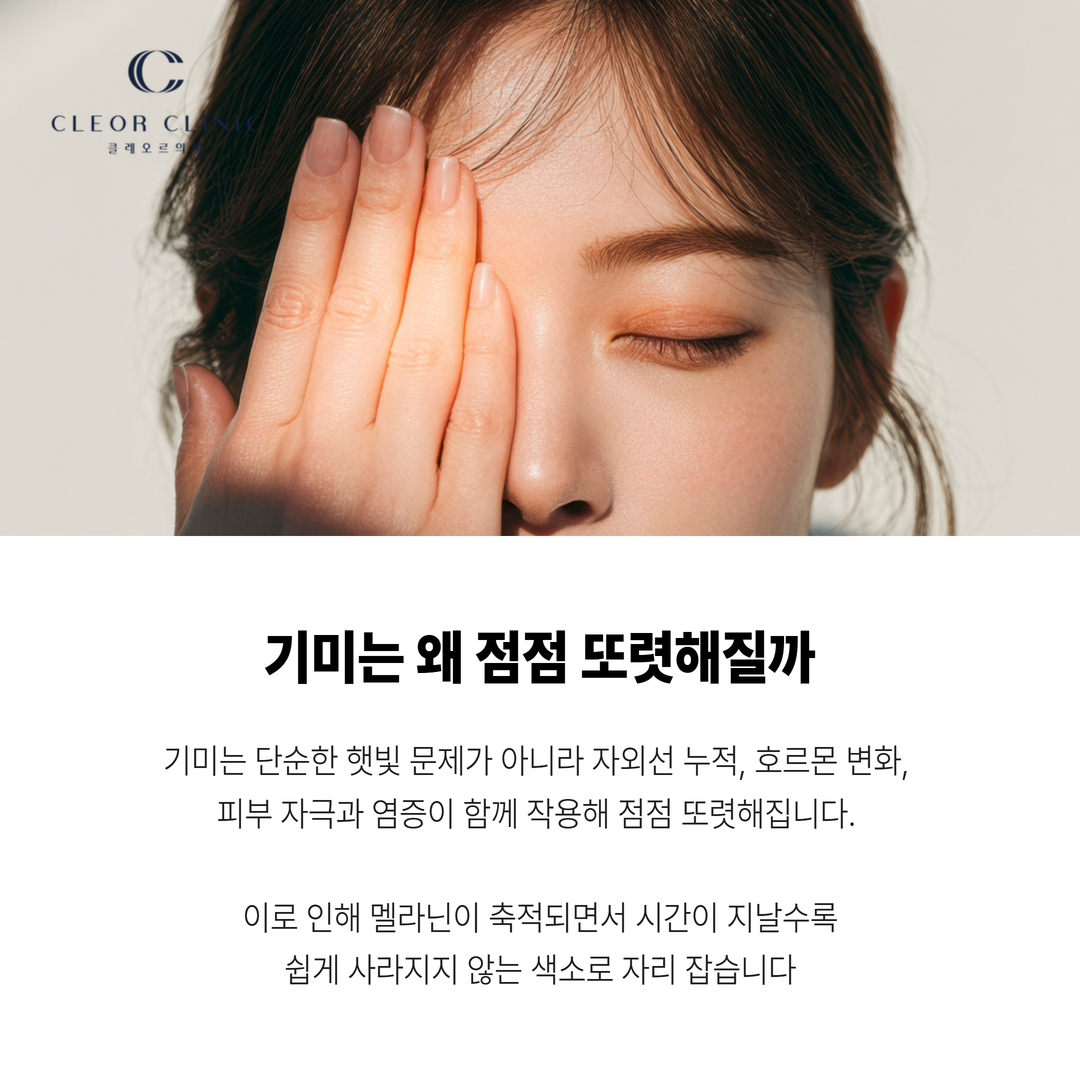
Why Does Melasma Become More Distinct?
Melasma is not a mark caused simply by sunlight.
Usually, three causes work together.
1) Cumulative UV Exposure
This is the biggest cause.
When UV rays hit the skin, melanocytes produce pigment
to protect the inner layers of the skin.
If this process is repeated daily,
melanin gradually accumulates in the same spot,
solidifying into the form of melasma.
2) Hormonal Changes
When hormones fluctuate due to pregnancy, oral contraceptives, or menopause,
melanin activity becomes more active.
This is also why many people find
melasma on both cheekbones becoming distinct
after childbirth or in their late 30s.
3) Skin Irritation and Inflammation
When acne, frequent peeling, strong friction,
or long-standing skin troubles accumulate,
pigment remains in the irritated areas,
sometimes settling as a mixture of melasma and blemishes.
Because these three factors act simultaneously,
melasma solidifies into marks that are difficult to reverse
with just cosmetics or massages.
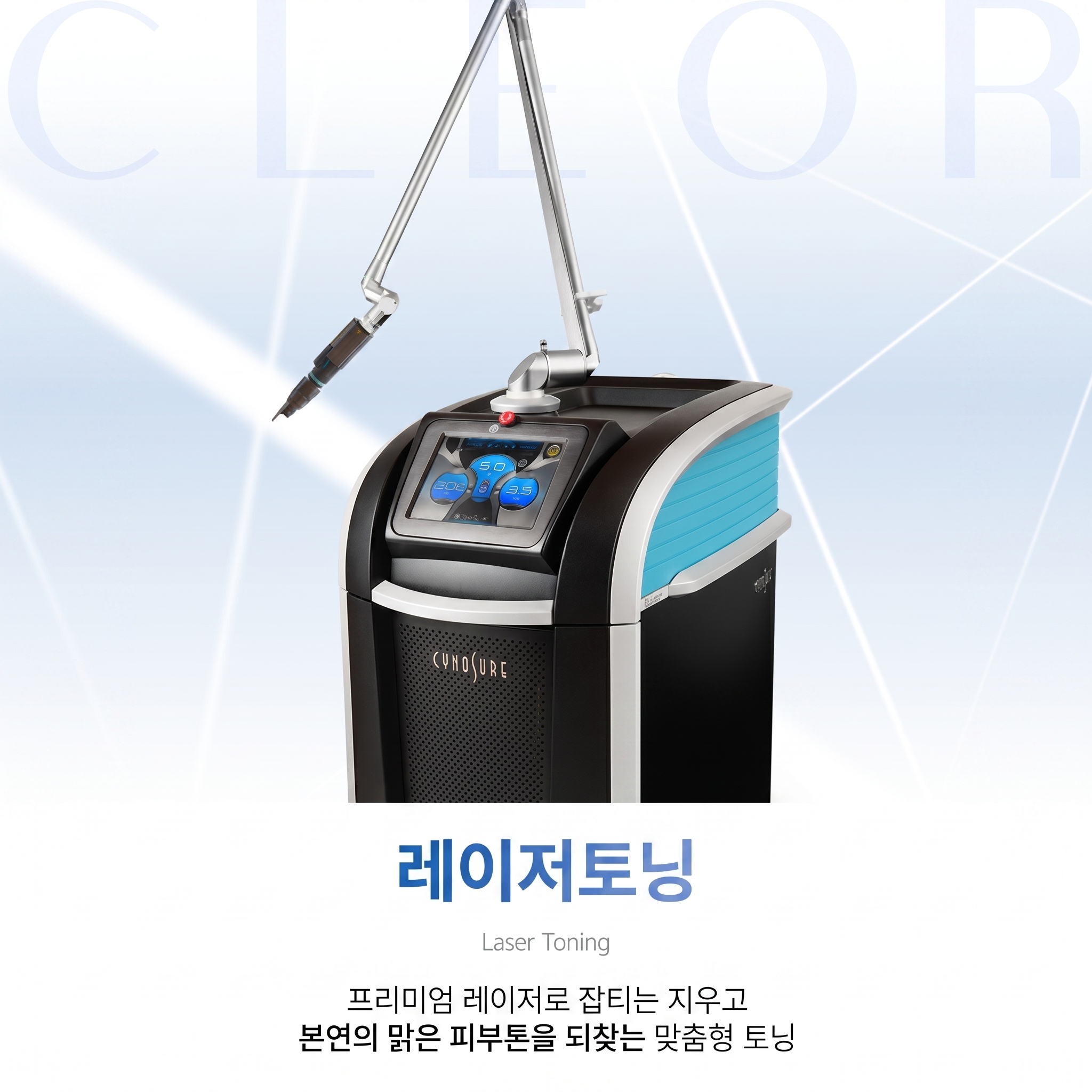
What is the Hongdae Melasma Laser Picosure?
Picosure, frequently used as a Hongdae melasma laser,
is a 755nm wavelength Alexandrite
picosecond laser device
manufactured by Cynosure in the USA.It is a medical device approved by the MFDS for indications such as
pigmented lesions, tattoos, and acne scars.
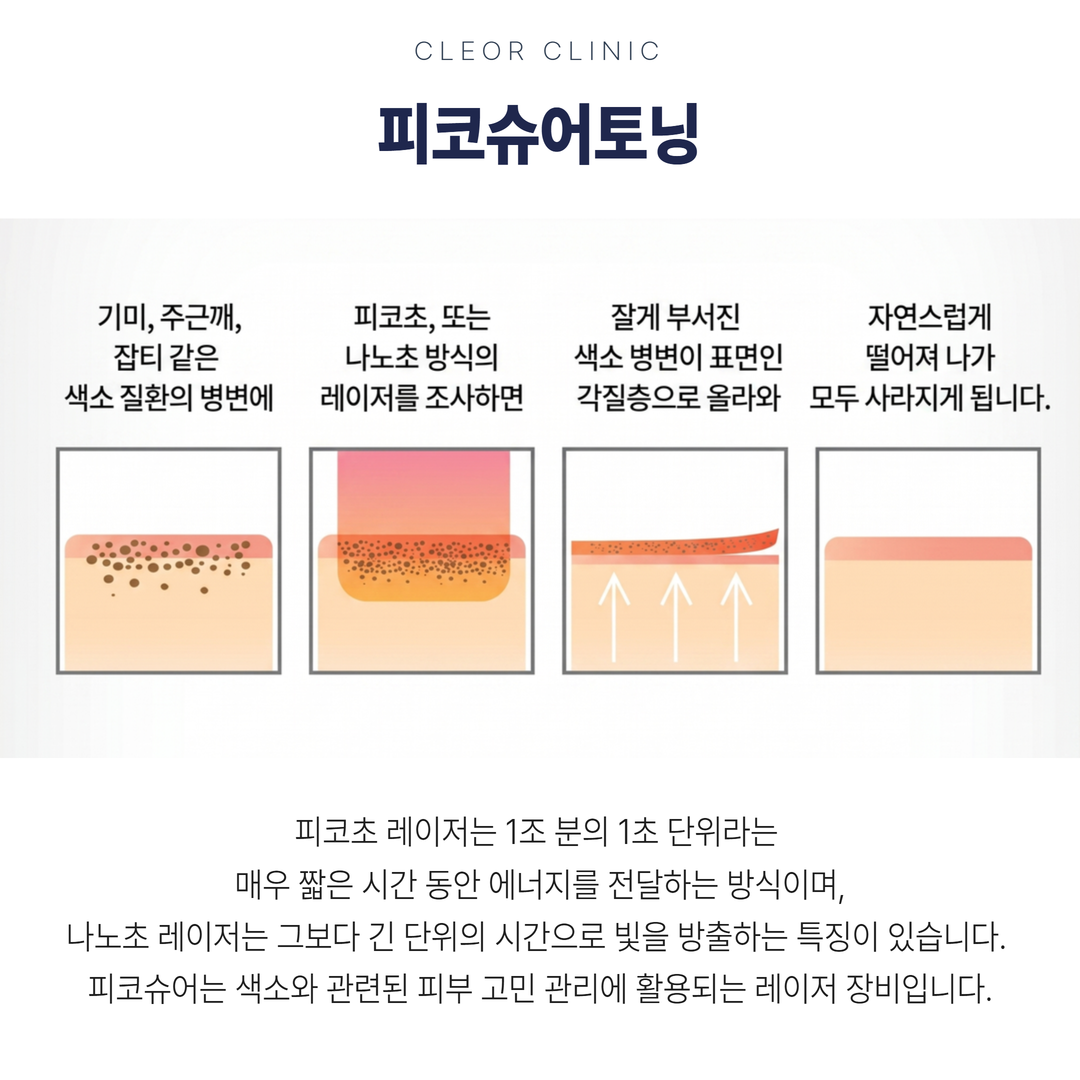
👉 A picosecond refers to a very short unit of time,
one-trillionth of a second.
Delivering energy within this short timeframeallows pigment to be gently broken down into fine particles,
helping to reduce irritation to the surrounding tissue.
How is it Different from Conventional Lasers?
Conventional nanosecond lasers
used strong heat to break down pigment,
which tended to irritate the surrounding skin.
Picosure works on the principle of breaking down pigment
using stimulation close to a shockwave within a short time.
The recovery period is relatively short,
and the return to daily life is quick.
Why is it Frequently Used for Melasma Care?
Melasma is often pigment settled deep near the dermal layer.
The 755nm wavelength of Picosure
has the characteristic of being well-absorbed by the brown melanin pigment that causes melasma,
making it a device frequently considered
for melasma care.
Various Changes Expected with PicosurePicosure is not a device used only for melasma.
Because it uses short picosecond pulses
to precisely break down pigment,
its range of application is relatively wide.
1) Refining Pigmentation such as Melasma, Blemishes, and Freckles
This is the most well-known area of application.
It breaks down melanin pigment settled inside the skin into fine particles,
helping it to be naturally discharged through the body's metabolism.
As treatments accumulate, many people experience
a noticeably clearer facial tone.
2) Care for Deep Pigmentation such as Age Spots and Nevus of Ota
Even pigment settled deep in the dermal layer
is within the reach of picosecond pulses,
so it is used for long-standing pigment care
that was difficult to access with conventional lasers.
3) Tattoo Removal
With excellent pigment breakdown capabilities, it is a device used for removing
tattoos of various colors, including black, blue, and green.
4) Refining Pores and Acne Scar Texture
When equipped with the optional Focus Lens,
micro-stimulations called LIOB (Laser-Induced Optical Breakdown)
are created inside the skin.
This stimulation supports the collagen regeneration environment,
and is also used for pore and scar texture care.
5) Overall Skin Texture and Tone Refinement
When pigment refinement and collagen support occur together,
you can expect a smoother skin texture.
However, even with the same procedure,
the extent of change varies from person to person
depending on the depth and type of pigment and skin type.
In the case of melasma, rather than fading completely in one session,
changes often become more apparent when performed cumulatively
at intervals of 2 to 4 weeks.
Who is it Recommended For?
The Hongdae melasma laser Picosure
is a frequently considered option
for those with the following concerns:
Those concerned about melasma on both cheekbones or the forehead
Those whose melasma became distinct after childbirth or hormonal changes
Those with an increase in both blemishes and freckles
Those worried about a dull tone due to UV exposure
Those with deep pigmentation like Nevus of Ota or age spots
Those who want to refine pores and acne scar texture simultaneously
Those who want a procedure with a quick return to daily life
Those Who Must First Check Eligibility for the Procedure
If you are pregnant or breastfeeding
If you have a history of inflammation or herpes in the treatment area
If you are taking photosensitizing medications
If you have a keloid-prone skin type
If you have recently had strong UV exposure or skin peeling procedures
While Picosure has a relatively short recovery period,
as the process of pigment discharge occurs within the skin,
it is best to manage the skin gently for a few days.
⚠️ Precautions
UV Protection is Most Important
Melasma is a mark where post-treatment care determines the results.
For a few days after the procedure, melanocytes are more sensitive than usual.
Exposure to UV rays can cause an adverse reaction where the pigment becomes even darker.
Please be sure to apply sunscreen when going out, and using physical blocks like hats or parasols
is also recommended.
Focus on Moisturizing
The skin may feel drier than usual for a few days after the procedure.
Apply plenty of soothing and regenerative creams.
Reducing Irritation
Avoid saunas, hot stone rooms, intense exercise, and alcohol on the day of the procedure.
If body temperature rises, redness and irritation may last longer.
It is best to stop using scrubs, peeling products, or strong cleansing devices
for about a week.
Temporary Symptoms
There may be slight redness and minor stinging immediately after the procedure.
Most of these subside within a few hours to a day.
In areas with dark pigment, thin scabs may form and fall off;
please do not peel them off by hand and wait for them to fall off naturally.
Makeup
Light base makeup is possible from the day after the procedure.
However, focusing on soothing on the day of the procedure helps with recovery.
If there is persistent pain, blistering, oozing, or changes in color,
please visit the clinic immediately for a check-up.
❓ Frequently Asked Questions
Q. Does melasma disappear in one session?
A. Some people experience changes in light blemishes
after a single session.
However, for long-standing melasma,
changes often become more apparent when 3 to 5 sessions are accumulated
at intervals of 2 to 4 weeks.
Q. How much pain is there during the procedure?
A. We apply plenty of numbing cream before the procedure,
so it is generally at a level that is quite tolerable.
In areas with dark pigment,
you may feel a momentary stinging sensation.
Q. Will it interfere with going to work the next day?
A. You can return to daily life immediately after the procedure.
Slight redness often subsides within a few hours,
and makeup can be applied naturally the next day.
Q. Can melasma recur?
A. Once broken down, the pigment does not return,
but melasma can settle in the same spot again
due to new UV exposure or hormonal changes.
UV protection and moisturizing are the keys to maintenance.
Q. Can I receive it along with other procedures?
A. It is often performed in combination with other treatments
such as skin boosters, Botox, or collagen boosters.
Schedules and combination designs will be provided during the initial consultation.
Q. What are the possible side effects?
A. Temporary redness, minor swelling,
thin scabbing, and post-inflammatory hyperpigmentation (PIH)
may occur in the treated area.
As rare changes such as blisters, scarring, or hypopigmentation
have been reported,
pre-consultation and post-treatment follow-up are important.
Even if the area is not large,
melasma is a mark that significantly affects the impression of facial tone.
Since it is not easily covered by makeup
and tends to darken over time,
small changes can have a big impact
on daily confidence.
If you are looking into Picosure as a Hongdae melasma laser,
rather than deciding blindly, it is best to determine the treatment direction
by considering the depth and type of melasma
along with your skin type.
At Cleor Clinic Hongdae Branch,
we design the treatment flow by examining the depth of melasma,
skin type, and accompanying texture concerns.
For your information, the Hongdae branch offers various treatment lineups
for pigment care, pore texture, tone refinement,
and elasticity enhancement
in addition to Picosure.
Those who wish to refine their overall appearance
can receive guidance during their visit.
If you are concerned about melasma and skin tone,
please feel free to contact Cleor Clinic Hongdae Branch.
※ This content was created for general information purposes; results may vary depending on the individual. Side effects may occur, so please consult thoroughly with medical staff during your visit.
클레오르의원 홍대점으로 편하게 문의 주세요.
※ 본 콘텐츠는 일반적인 시술 정보 안내 목적으로 작성되었으며 시술 결과는 개인 상태에 따라 달라질 수 있습니다. 부작용이 발생할 수 있고 자세한 사항은 진료 시 의료진과 충분히 상의해주시기 바랍니다.