

Hello.
I am Director Dong-young Kim of Cleor Clinic Hongdae Branch.
Many people say this at some point while looking in the mirror.
"I've had fillers, but after some time, the same area looks empty again."
"Even with repeated hyaluronic acid treatments, I don't feel a fundamental change."
"I wonder if there's a treatment that makes my skin firmer rather than just filling it up."
While treatments that repeatedly fill the same area are good,
more people are looking for ways to fundamentally restore the skin itself.
Filling treatments and regenerative treatments have different approaches.
Instead of injecting external substances,
it focuses on stimulating the skin to produce its own collagen.
Today, for those looking into Olidia in Hongdae,
I will speak honestly about autologous collagen-stimulating skin boosters.
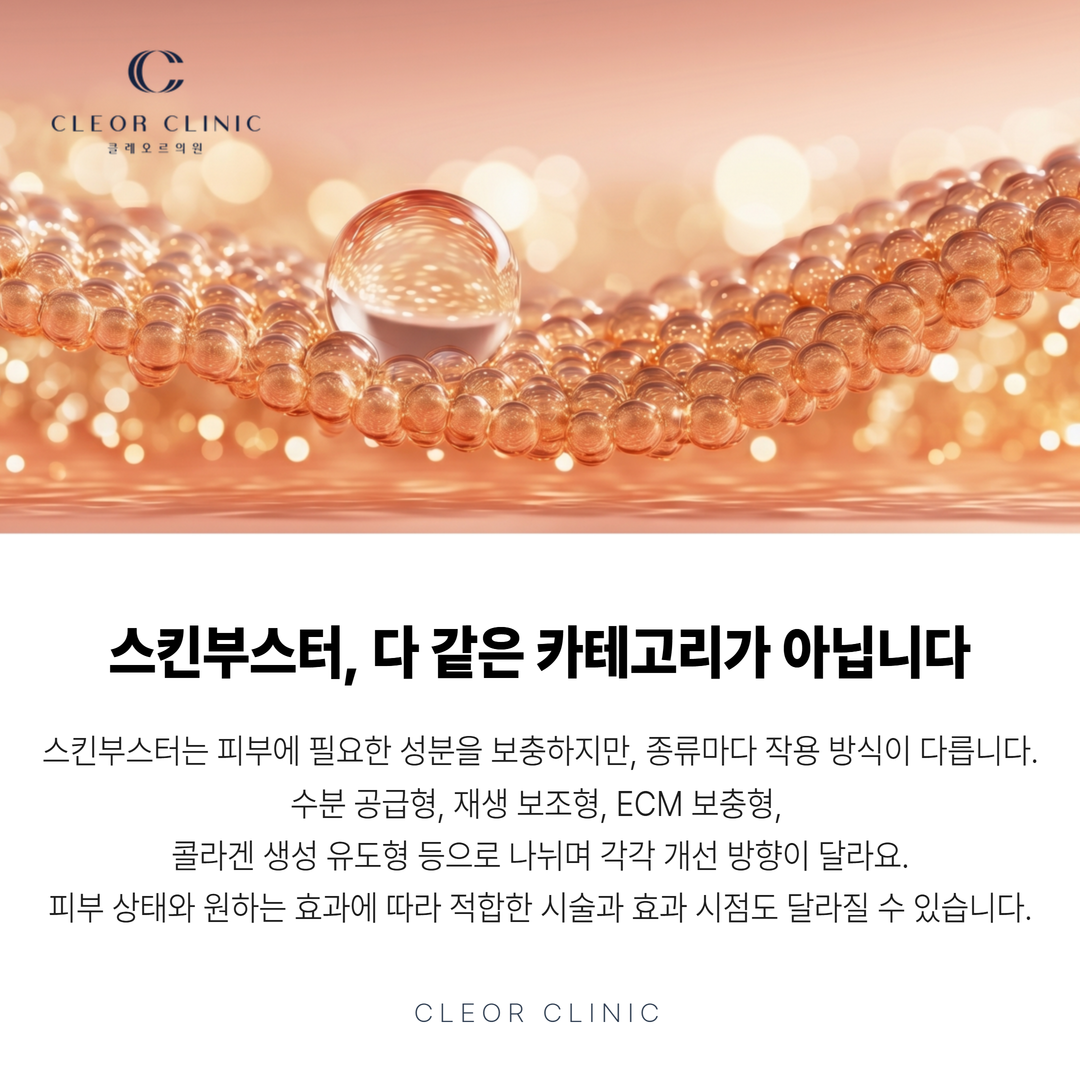
Skin Boosters: Not All Belong to the Same Category
While treatments that replenish deficient components in the skin are collectively called skin boosters,
a closer look reveals several categories with different mechanisms of action.
1) Hydrating Skin Boosters
The most representative are Hyaluronic Acid (HA)-based treatments.
They focus on replenishing moisture in the skin surface and dermis.
They are used for inner dryness and fine lines, with relatively fast results.
2) Cell Regeneration Support Skin Boosters
PN (Polynucleotide)-based treatments like Rejuran belong here.
They focus on supporting the regenerative environment of damaged cells.
3) ECM Replenishing Skin Boosters
These are hADM (human Acellular Dermal Matrix)-based treatments like Levix.
They focus on directly replenishing the Extracellular Matrix (ECM) that fills the space between collagen and elastin.
4) Autologous Collagen-Stimulating Skin Boosters — Collagen Boosters
This is the category Olidia in Hongdae belongs to.
Instead of injecting external substances,
it focuses on stimulating the skin to produce its own collagen.
Even under the broad umbrella of 'skin boosters,'
the mechanisms differ, meaning the ideal candidates and the timing of results vary.
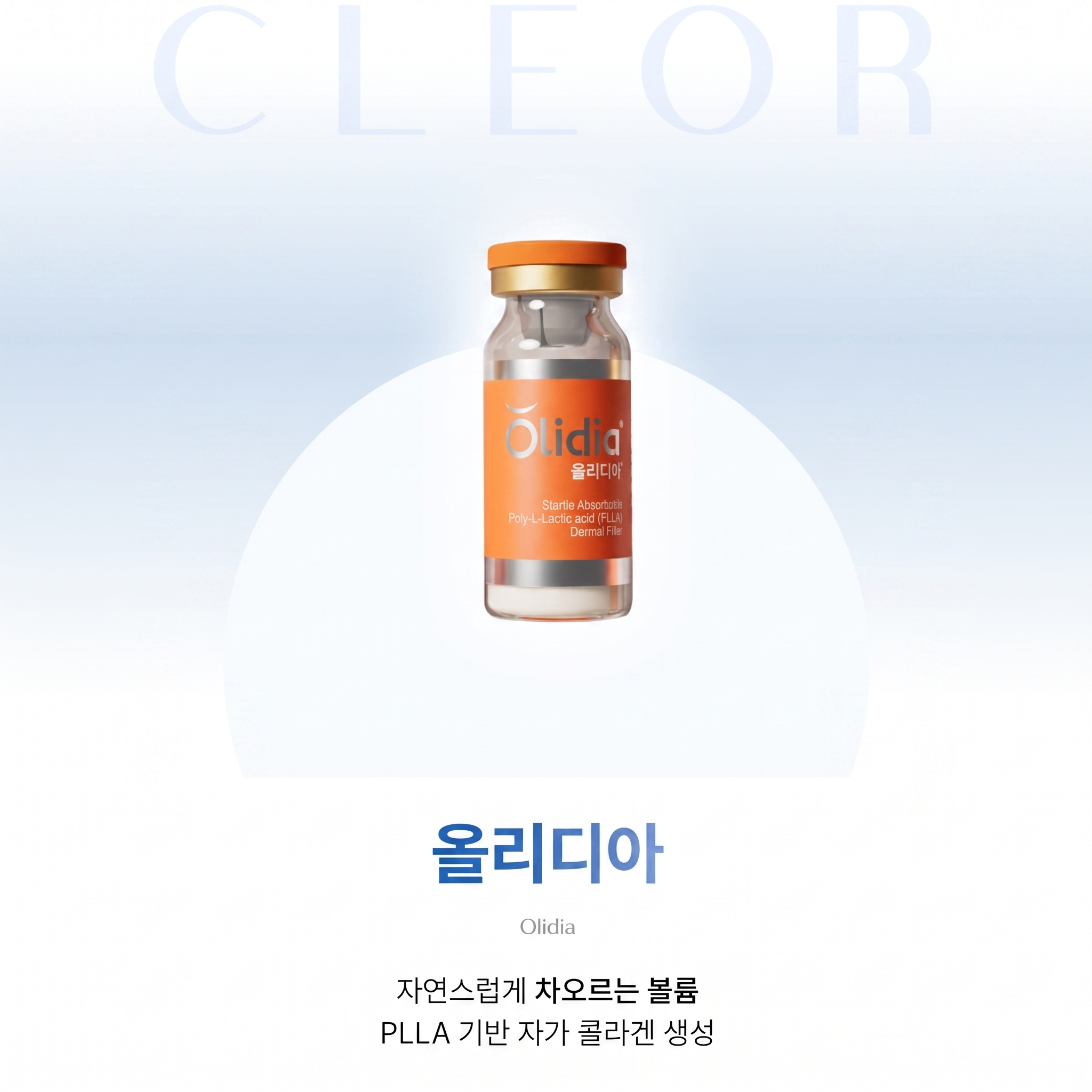
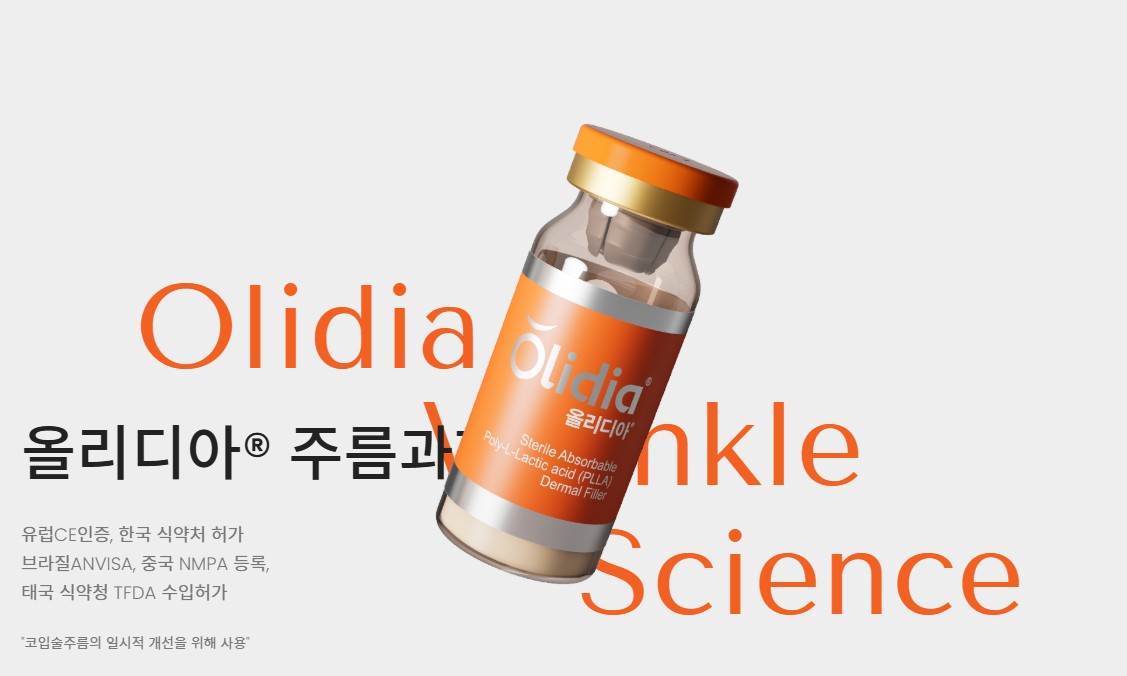
What is Olidia Hongdae?
Olidia Hongdae is
an autologous collagen-stimulating treatment based on Poly-L-Lactic Acid (PLLA).
It is a medical device approved by the European CE and the Korean Ministry of Food and Drug Safety (MFDS).
Sinclair Korea is responsible for domestic distribution,
and it is a Korean-made product manufactured by PRP Science Korea using proprietary technology.
What is PLLA?
PLLA is a biodegradable polymer component.
It is a proven ingredient that has long been used in surgical sutures,
and it naturally decomposes into carbon dioxide and water over time within the body.
This means it leaves no residue behind.
When PLLA is injected into the dermis,
cells called fibroblasts recognize these particles
and begin to produce collagen.
Instead of filling from the outside,
it is a method where the skin fills itself with its own collagen.
To use a simple analogy, it's not like placing artificial flowers in a withered garden,
but rather like laying new soil and fertilizer so that plants can grow on their own.
How is it different from regular fillers?
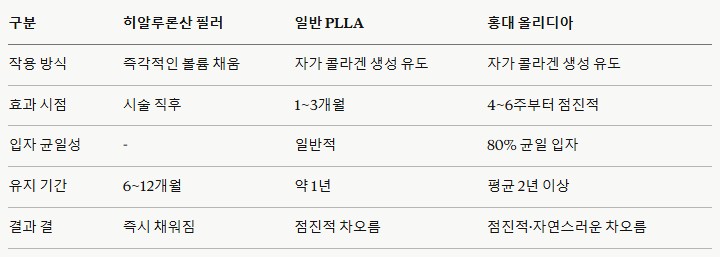
This is the part patients find most confusing.
Fillers are treatments that fill from the outside,
so the effect is immediate, but they decompose and disappear over time.
Olidia works by growing your own collagen,
so changes appear slowly, but they are natural and long-lasting.
Relationship with Sculptra
Sculptra is the most well-known in the same PLLA category.
Olidia has undergone direct comparative clinical trials (head-to-head) with Sculptra,
and is known as a product that has proven equivalence in safety and efficacy.
Advantages of Olidia Hongdae
1) Autologous Collagen Production — Natural Results
Instead of inflating by injecting external substances,
it is a method where your own collagen grows, resulting in natural outcomes.
You can expect a change closer to an 'impression of how it originally was' rather than a 'filled-in feeling.'
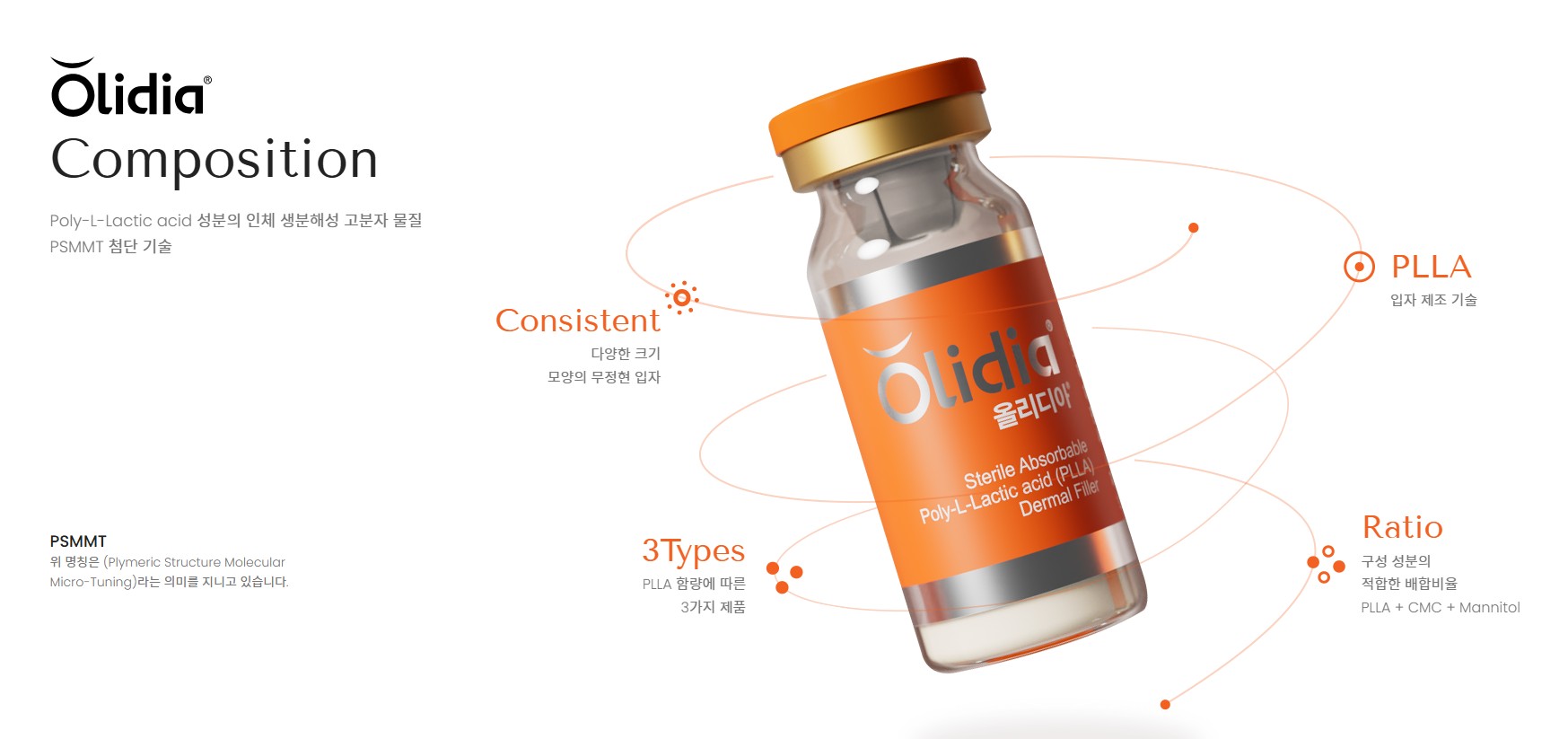
2) 80% Uniform Particles — Maintaining Consistent Volume
Since 80% of the total components consist of uniform particles,
it is known to act consistently within the skin.
This is also a design element that reduces the risk of nodules.
3) Maintenance Period of Over 2 Years on Average
While hyaluronic acid fillers last 6–12 months
and regular PLLA lasts about 1 year,
Olidia is known to maintain its effects for over 2 years on average.
The advantage is that frequent treatments are not required.
4) Applicable to Various Areas
Nasolabial folds
Forehead and cheek volume
Fine lines around the mouth
Neck wrinkles and décolleté
Overall elasticity and texture refinement
It has a wide range of applications, not just for the face but also for the neck and décolleté.
5) Biodegradable Safe Ingredient
PLLA naturally decomposes in the body,
making it a proven ingredient that leaves no residue.
6) KFDA + European CE Dual Approval
It is a medical device approved by both the Korean MFDS and the European CE.
Recommended For
Those who want fundamental changes in elasticity rather than repeated filler treatments
Those who prefer natural changes over a 'filled-in' look
Those concerned about deepening nasolabial folds
Those whose faces look saggy due to loss of cheek volume
Those looking for treatments with long-lasting effects
Those who find frequent re-treatments burdensome
Those experiencing changes in elasticity after their mid-to-late 30s
Cases to Check During Pre-consultation
If you are pregnant or breastfeeding
If you have active inflammation or a history of herpes in the treatment area
If you have a keloid-prone skin type
If you have a tendency for hyperpigmentation
If you have a tendency for hypertrophic scars
If you have been diagnosed with an autoimmune disease
If you are regularly taking anticoagulants
If you have a history of allergies to PLLA
Depending on skin condition and medication history,
the treatment may not be suitable, which we will verify during the pre-consultation.
Pain and Recovery
The procedure is performed after applying numbing cream and waiting for about 20–30 minutes.
Precise injection is performed using a fine cannula or needle,
and the level of stimulation is generally tolerable for most.
It takes about 30 minutes for the entire face.
Slight redness and mild swelling may appear immediately after the procedure.
Most subside within a day to a few days.
If bruising occurs, the color may remain for about a week.
Furthermore, Olidia is not an immediate treatment.
As new collagen is produced 4–6 weeks after the procedure,
the changes gradually take place.
The most distinct changes are often visible at the 3-month mark,
and gradual improvement can be expected up to 6 months.
⚠️ Post-Treatment Precautions
Due to the nature of Olidia as an autologous collagen-stimulating treatment,
it is best to handle the area gently for a few days.
Reducing Heat Stimulation
Please avoid saunas, steam rooms, strenuous exercise, and alcohol on the day of the procedure.
An increase in body temperature can prolong irritation in the treated area.
Massage After PLLA Treatment
Unlike other treatments, for PLLA treatments, gently massaging the treated area
is a recommended step.
Specific frequency and directions will be provided during the pre-consultation.
Condition Management During Collagen Production
During the 4–6 weeks when PLLA produces collagen,
adequate hydration and a protein-rich diet
can help the collagen synthesis environment.
Reducing Intense Facial Expressions
During the first few days while PLLA settles,
it is better to reduce large movements of facial muscles.
Repeated intense laughing or frowning may affect particle distribution,
so it is recommended to refrain from them.
Alcohol and Anti-inflammatory Drugs
Please refrain from drinking alcohol for 1–2 weeks after the procedure,
and avoid taking non-steroidal anti-inflammatory drugs (NSAIDs) like ibuprofen
if possible.
These medications can affect the collagen production response.
Limiting UV Exposure
UV rays are the biggest factor that accelerates collagen breakdown.
During the period when new collagen is being formed after the procedure,
please pay more attention to UV protection than usual.
UV Protection
Please apply sunscreen thoroughly during recovery.
When Immediate Clinic Visit is Required
If you experience persistent pain, hard nodules,
or visible changes in color,
please visit the clinic immediately for an evaluation.
Olidia is not a treatment that shows immediate changes.
Unlike fillers, volume is not filled immediately after the procedure;
instead, the effect appears gradually over 4–6 weeks,
so it may not be suitable for those expecting instant results.
There are individual differences in the collagen production response,
so the extent of change can vary from person to person even with the same amount of treatment.
In cases of deep wrinkles or significant volume loss,
Olidia alone may have limitations, so combining it with fillers
or multiple sessions may be recommended.
Those with keloid-prone skin, hyperpigmentation, or hypertrophic scar tendencies
will have their eligibility for the treatment verified during the consultation first.
❓ Frequently Asked Questions
Q. Can I see results with just one session?
Olidia is not an immediate treatment but one that induces autologous collagen production.
Changes begin after 4–6 weeks and often become most apparent at the 3-month mark.
Depending on the area and collagen response, 2–3 cumulative sessions may be recommended.
Q. Can I get it with fillers?
It is often performed in combination, using fillers for immediate volume
and Olidia to induce natural elasticity.
The sequence and schedule will be provided during the pre-consultation.
Q. How long do the effects last?
It is known to last for over 2 years on average.
Differences exist depending on individual skin condition, lifestyle habits, and UV management.
Q. How is it different from Sculptra?
It is a collagen booster belonging to the same PLLA category.
Olidia has undergone direct comparative clinical trials with Sculptra,
and is known as a Korean-made product using proprietary technology that has proven equivalence in safety and efficacy.
Q. Does the treatment area ever become hard?
One of the rare side effects of PLLA treatment is the sensation of nodules.
Olidia is designed with 80% uniform particles to reduce the risk of nodules,
but it cannot be definitively stated that the risk is zero.
If you feel nodules after the procedure, please visit the clinic immediately for an evaluation.
Q. How much pain is there?
Since it is performed after applying sufficient numbing cream, the level is generally tolerable for most.
Q. What are the possible side effects?
Bruising, swelling, temporary redness, tenderness, and nodules may occur at the treatment site.
Rarely, allergic reactions, infections, and hypertrophic reactions
have been reported, making pre-consultation and post-treatment follow-up important.
While treatments that repeatedly fill the same area have value,
the time has come where you can choose to let your skin fill itself.
Instead of injecting from the outside,
it is a method that stimulates your own collagen to grow,
so while changes come slowly, they settle naturally and last a long time.
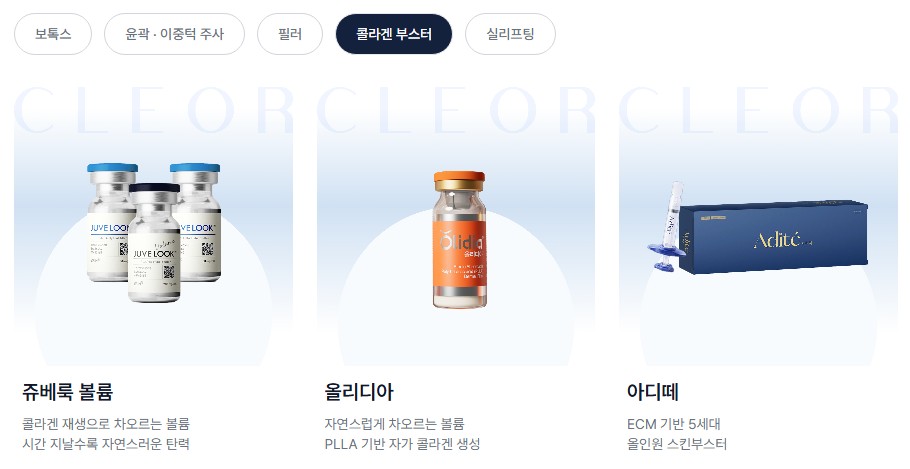
Olidia Hongdae is a PLLA collagen booster approved in both Korea and Europe,
and with its 80% uniform particle design and an average maintenance period of over 2 years,
it is a frequently considered option for those who want natural changes in elasticity.
If you are concerned about areas like nasolabial folds, sunken cheeks, or neck wrinkles,
please feel free to contact Cleor Clinic Hongdae Branch.
※ This content is for general informational purposes, and results may vary by individual.
Please decide on an accurate diagnosis and treatment through a consultation with a specialist.